Sustainability at KuchenMeister
KuchenMeister has always stood for tradition, quality and innovation.
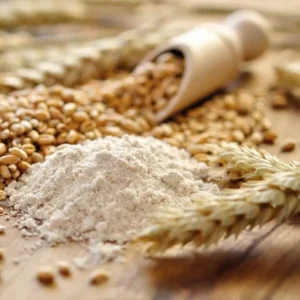
Even as early as 1961, when the first manufacturers began using water instead of expensive milk in the production of wafer rolls, Günter Trockels remained true to his tried-and-true, high-quality recipes. High-quality raw materials, efficient machinery, and the careful use of resources define our approach.
Learn more below about our independently certified raw materials, our product quality, and the specific goals of our sustainability plan.
Further information on our sustainability topics can also be found on our press page, for example.
KuchenMeister is ZNU-certified in accordance with the ZNU Standard for Sustainable Business Practices 2018, an externally certifiable standard developed by Witten/Herdecke University. As part of our sustainability management system, we work systematically and in a measurable way to further improve our performance in the environmental, economic, and social areas. Our processes for sustainable corporate management are reviewed annually through independent audits.
Our Sustainability Goals
Social
The implementation of our workplace health management program, through which the
The initiative aimed at improving employee health and satisfaction is currently still being implemented.
Once the contract terms with our partner have been finalized and all processes have been defined in 2025, our employees will be able to
in 2026, extensive communication and concrete measures as part of the
occupational health management program. Our goal for 2026 is therefore the successful implementation of our occupational
Health management for our employees.
Ecological
In 2025, we introduced a system for identifying products that better meet consumer needs. To do this, we relied on a combination of market research data, personal interviews, and sensory tastings with our end consumers at our
Factory store selected.
Our goal for 2026 is to increase the recyclability of our packaging across all product groups to over 80% (as determined by the ZSVR’s minimum standard). By gradually transitioning individual product groups, we aim to achieve 100% recyclability even before 2030.
Economic
In 2025, we optimized our recycling program at the Thüle site in collaboration with a local waste management partner. As a result, the separation rate for commercial waste increased by 34.13% compared to the 2021 reference period (from 44.87% to 79.00%). In accordance with our implementation plan, we will gradually roll out this program to our two sites in Soest and our site in Duingen by the end of 2027.
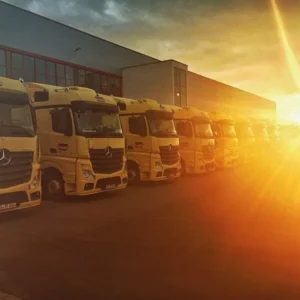
Our goal is to gradually transition the fuel supply for our own truck fleet from fossil diesel to HVO100 by the end of 2026. HVO100 is a synthetic diesel fuel produced from biogenic residues and waste materials (such as used cooking oil). By using certified HVO100, we reduce the fuel’s greenhouse gas emissions across the entire value chain (well-to-wheel) by up to 90% compared to fossil diesel (according to EU RED II certification).
Sustainability at KuchenMeister

At KuchenMeister, we are convinced that business success and environmental and social responsibility go hand in hand. Our goal is to continuously develop sustainable solutions that measurably reduce our environmental impact and strengthen society.
That is why we have deliberately chosen not to simply offset emissions. Instead, we consistently focus on actually reducing our environmental footprint in our own processes.
In our regularly published sustainability report, we transparently disclose the measures we are taking to reduce our environmental footprint and conserve energy—as well as the specific goals we have set for the coming years.
For us, sustainable business practices are not limited to climate protection alone, but encompass many aspects of our daily business operations
Download our latest sustainability report here and get a detailed look at our projects and progress: hier herunterladen
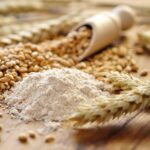
Details about our raw materials will be posted here shortly.
The continuous reduction of our greenhouse gas emissions is a key component of our environmental responsibility. We are constantly working to identify opportunities for energy savings and systematically reduce our energy consumption. Our energy management system is certified to ISO 50001 and is audited annually by an independent external auditor.
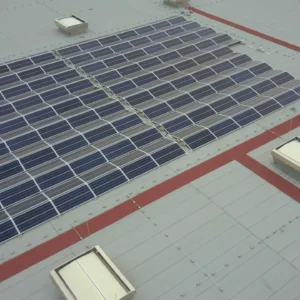
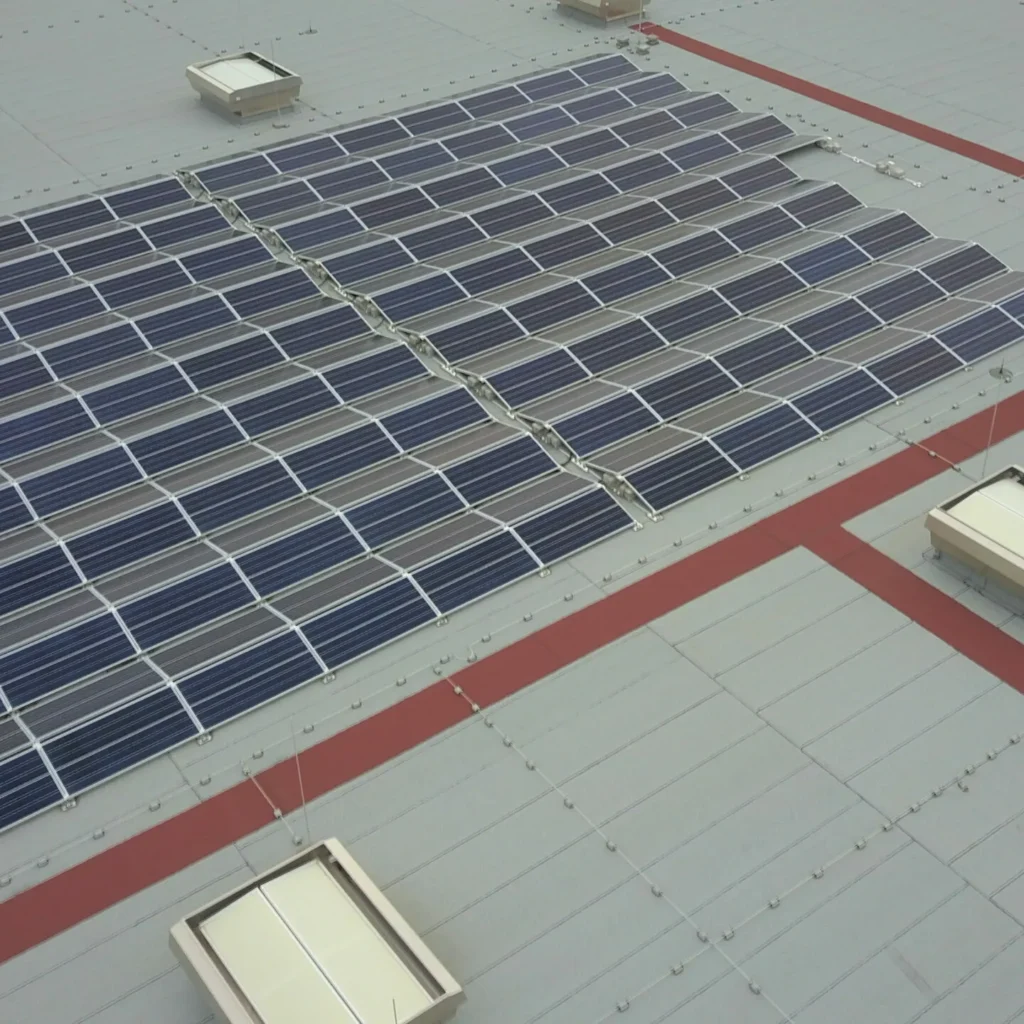
To meet our energy needs in a more sustainable way, we are continuously increasing the share of electricity we generate ourselves through our own photovoltaic systems and combined heat and power plants. We cover the remaining electricity demand by purchasing certified green electricity from renewable energy sources.
To reduce our energy consumption, we are implementing targeted efficiency measures at our facilities—including heat recovery systems in the production process and a company-wide switch to LED lighting.
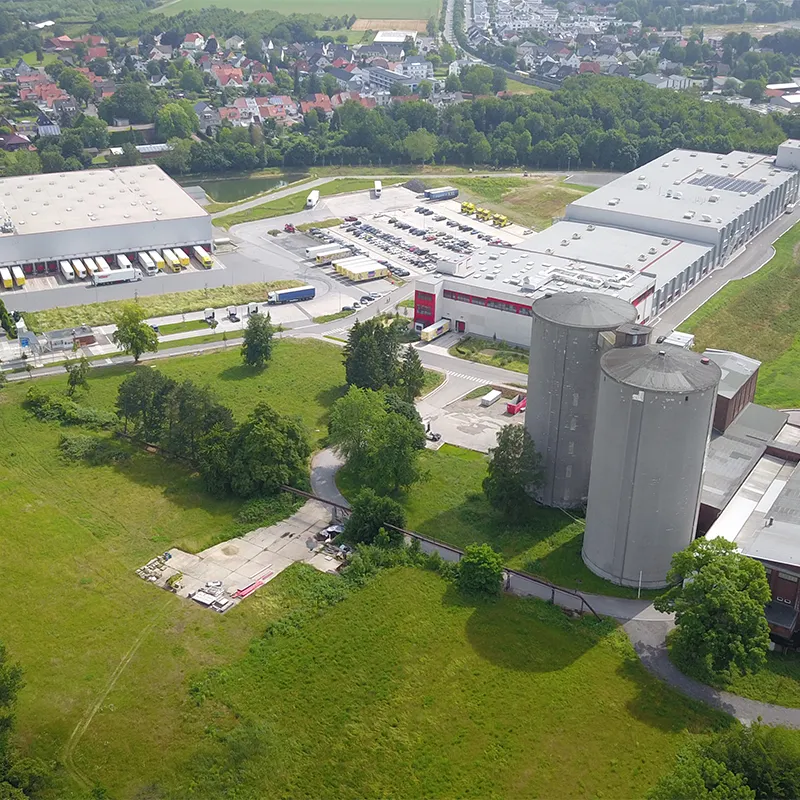
In 2009, we acquired the “Alte Zuckerfabrik” industrial brownfield site and have been continuously expanding it. During the construction of the warehouse complex, we implemented comprehensive resource-conserving and energy-efficient measures: Thanks to enhanced roof insulation, we met—and even exceeded—the KfW55 standard. In addition, we used insulating ISO-ROCK concrete, insulated floor slabs, and triple-pane windows. We specifically use the waste heat from our ovens to heat the building. Furthermore, our office building is equipped with its own photovoltaic system.
The outdoor area was also designed with resource conservation in mind, emphasizing reuse: More than 300 tree trunks, which had been classified as unprocessable at the sawmill, were used to create over 2,000 meters of road and plaza borders. In addition, 580 square meters of reused basalt paving stones from a former barracks in Soest found their way to the sugar factory—giving the sidewalks and plazas their very own character.
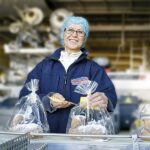
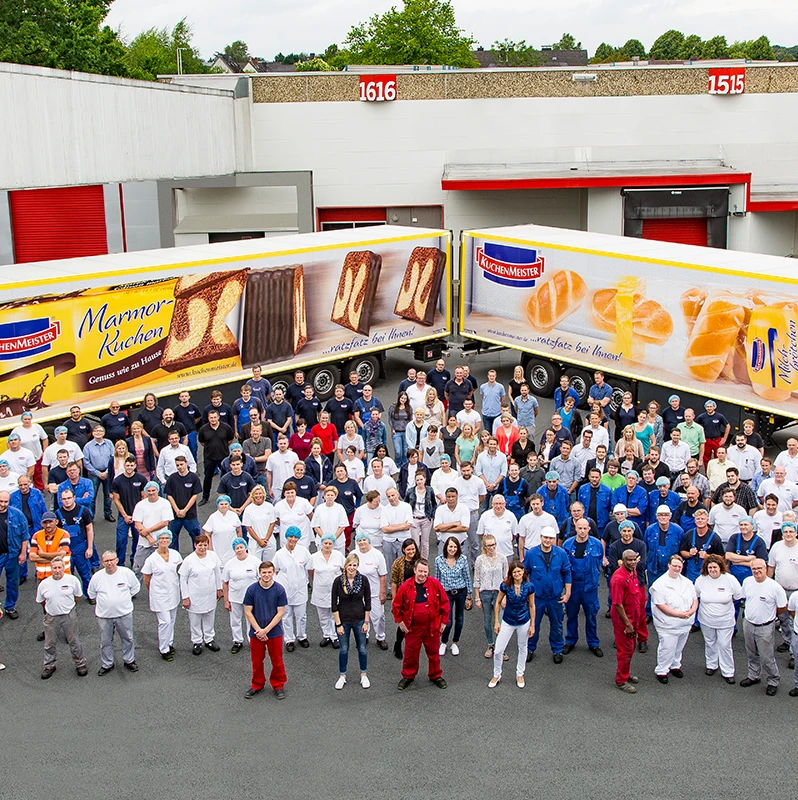
The people at KuchenMeister shape and drive the work and character of our company. This family-owned business combines a time-honored set of values with modern management practices. Within this framework, our employees have a wide range of opportunities for growth and creativity—for themselves, for their roles, and for the company.
Diversity is a way of life for us: We value the experience of our long-time employees just as much as the fresh ideas of young people, and we create personalized working conditions to, for example, provide targeted support for balancing family and career. More than 1,000 employees from around 60 countries contribute their expertise, dedication, talent, and creativity every day. In addition, nearly 60 apprenticeship positions across 12 trades offer young people a solid start to a successful career.
To actively promote the health of our employees, we support athletic activities, such as offering JobRäder bicycles and encouraging participation in company runs.
We have also set new standards for modern work in terms of physical space: In 2021, approximately 100 employees from across our entire administrative department moved into the new administrative floor with an open-plan office at the Zuckerfabrik.
In 2009, we acquired the “Alte Zuckerfabrik” industrial brownfield site and have been continuously expanding it. During the construction of the warehouse complex, we implemented comprehensive resource-conserving and energy-efficient measures: Thanks to enhanced roof insulation, we met—and even exceeded—the KfW55 standard. In addition, we used insulating ISO-ROCK concrete, insulated floor slabs, and triple-pane windows. We specifically use the waste heat from our ovens to heat the building. Furthermore, our office building is equipped with its own photovoltaic system.
The outdoor area was also designed with resource conservation in mind, emphasizing reuse: More than 300 tree trunks, which had been classified as unprocessable at the sawmill, were used to create over 2,000 meters of road and plaza borders. In addition, 580 square meters of reused basalt paving stones from a former barracks in Soest found their way to the sugar factory—giving the sidewalks and plazas their very own character.